كيفية اختيار آلة استحلاب مستحضرات التجميل: دليل عملي للمشتري
كيفية اختيار آلة استحلاب مستحضرات التجميل
تعرف على كيفية اختيار آلة استحلاب مستحضرات التجميل: حجم الدُفعة، القوى القصية، التجانس بالفراغ مقابل المضمنة، سهولة التنظيف، الامتثال، والتكلفة الإجمالية.
آلة استحلاب مستحضرات التجميل، مستحلب مستحضرات التجميل، مجانس فراغي، مجانس خطي، خلاط استحلاب، خلاط مستحضرات التجميل، خلاط عالي القص
ممارسات التصنيع الجيد (GMP)، آيزو 22716 (ISO 22716)، فولاذ مقاوم للصدأ 316L (SS316L)، التنظيف/التعقيم في المكان (CIP/SIP)، الدوار-الثابت، معدل القص، اللزوجة، التدرج بالحجم (scale-up)، إزالة الهواء، حجم الجسيمات، كفاءة المعدات الشاملة (OEE)، قابلية التنظيف
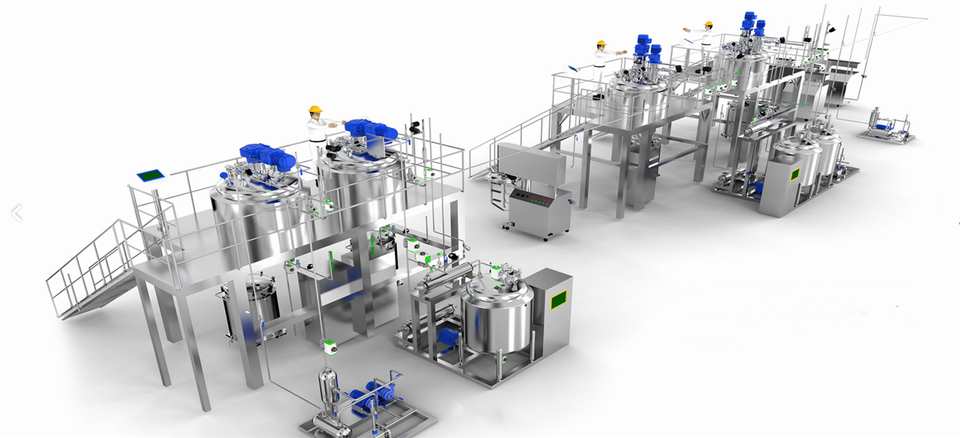
ماكينة الاستحلاب التجميلية المناسبة تؤثر بشكل مباشر على استقرار المستحلب، وتناسق الدفعات، وقت التنظيف، ووَقت طرح المنتج في السوق. يوضح هذا الدليل معايير الاختيار الأساسية - بدءاً من حجم الدفعة ومتطلبات القص ووصولاً إلى الامتثال والتنظيف وتكاليف الملكية طويلة الأجل - حتى تتمكن بثقة من تحديد مواصفات المجانس الفراغي، أو المجانس المضمن، أو نظام الاستحلاب المتكامل للكريمات، واللوشن، والسيروم، والجل، وغيرها.
ابدأ بمتطلبات منتجك وعمليتك
أنواع المنتجات والمراحل:
الأنظمة الزيتية في مائية (O/W)، والأنظمة المائية في زيتية (W/O)، والأنظمة اللامائية، والهلاميات (الجل)، والمنتجات القائمة على الفاعل بالسطح
المواد الفعالة الحساسة للحرارة، أو العطور، أو الكحولات (اعتبارات توجيهات أتيخس ATEX)
خصائص الجودة المستهدفة:
حجم القطرات/الجسيمات المستهدف (مثل D90 < 10-20 ميكرومتر للعديد من الكريمات)
اللمعان، اللزوجة في درجة حرارة الاستخدام، الثبات أثناء التخزين/النقل
حجم الدفعات الإنتاجية والإنتاجية:
حجم الدفعات الحالي والتوسع المتوقع (تجريبي، متوسط، واسع النطاق)
تكرار تغيير النماذج وتنوع وحدة حفظ المخزون (يؤثر على التنظيف والإعداد)
المرفق والخدمات العامة:
توفر الطاقة، والبخار، والمياه المبردة، والهواء المضغوط، والتفريغ (الفاكيوم)
تصنيف الغرف والتخطيط الصحي للمناطق
تجانس بالتفريغ (فاكيوم هوموجينايزر) مقابل مجانس خطي (إنلاين هوموجينايزر) مقابل خلاط دفعات (باتش ميكسر)
مجانس الاستحلاب بالتفريغ
الأفضل لـ: الكريمات/المراهم ذات اللزوجة العالية، التحكم في الهواء المحبوس، الترطيب المنتظم للمساحيق، إزالة الغازات السريعة
الميزات: سترة تدفئة/تبريد مدمجة، إزالة الغازات بالتفريغ، قص قوي باستخدام الدوار والساكن، تحكم أفضل في حجم الجسيمات واللمعان
العيوب: تكاليف رأس مالية أعلى؛ يجب تصميم طريقة التنظيف (خيارات جاهزة للتنظيف في المكان CIP)
جهاز تجانس مدمج (إعادة تدوير)
الأفضل لـ: الأحجام المتوسطة إلى العالية، التحسين المستمر لحجم الجسيمات، والربط المرن بالخزانات الحالية
الإيجابيات: قابل للتطوير؛ يمكن صقل المستحلب بعد الدفعة؛ تبديل وحدات هندسة الجزء الثابت
العيوب: يتطلب أنابيب تغذية وارجاع؛ وقد يزال بحاجة إلى خلاط دفعي لترطيب المواد الصلبة
خلاط دفعي عالي القص (مثبت من الأعلى/الأسفل)
الأفضل لـ: اللزوجة المنخفضة، المستحلبات الأولية، المختبرات/التجارب، ترطيب المسحوق
المزايا: بسيط، فعال من حيث التكلفة، سهل التعديل التحديثي
السلبيات: إزالة الغازات محدوة؛ قد تختلف الجودة باختلاف المشغل وتسلسل التحميل
نصيحة: تجمع العديد من خطوط مستحضرات التجميل بين غلاية التجانس ذات التفريغ الهوائي وحلقة التجانس المضمنة تسريعاً لعملية الترطيب الرطب وتحقيقاً لحجم جسيمات متسق، ثم تُختم العملية بإزالة الغازات تحت التفريغ للحصول على منتج لامع وخالٍ من الهواء.
المواصفات التقنية الرئيسية التي تهمنا
- قص وهندسة العضو الدوار والثابت
- الدعامات الساكنة القابلة للتبديل (ناعمة، متوسطة، خشنة) تتيح الضبط لدرجة اللزوجة وحجم القطيرات المستهدف
- ابحث عن تصميمات مثبتة ذات تفاوتات دقيقة ودوارات متوازنة تقليل الاهتزاز
- قدرة المحرك وطاقة الخلط
- مطابقة قدرة المحرك بالكيلوواط وسرعة الطرف مع اللزوجة وحجم الدفعَة؛ فالأجهزة ضعيفة القدرة تطيل الدورات وتُعرّض جودة المستحلبات للخطر
- يتيح التحكم باستخدام محرك التردد المتغير (VFD) بدءاً تدريجياً سلساً، ويقلل من التناثر، ويساعد في حماية المكونات النشطة الحساسة.
تصميم السفن - أجزاء التلامس من الفولاذ المقاوم للصدأ SS316L؛ تشطيب السطح عادة Ra ≤ 0.8 ميكرومتر لمستحضرات التجميل
- تسخين/تبريد بغلاف مزدوج مع تحكم موثوق في درجة الحرارة ومستشعرات في نقاط ممثلة
- محرك كاشط لكسح الجدران، وتحسين انتقال الحرارة، ومنع نقاط السخونة الزائدة
- التفريغ وإزالة الغازات
- تصميم حجم مضخة تفريغ قوي وموانع تسرب لإزالة الهواء بسرعة؛ كما يساعد التفريغ في ترطيب المسحوق ويقلل من الفقاعات الدقيقة
الأجهزة والتحكم - PLC/HMI مع إدارة الوصفات، سجلات الدفعات، الإنذارات، ومسارات تدقيق اختيارية
- مراقبة عزم الدوران، ودرجة الحرارة، والضغط/التفريغ، والمستوى لضمان قابلية التكرار والتوسع
- حقن المساحيق
- تعمل الحاقنات (الشفاطات) أو قمع المسحوق المفرغ على تقليل التكتل، والغبار، وتكون العيون السمكية أثناء ترطيب الكربومير، والصمغ، والبوليمرات
المواد، والتصميم الصحي، والموانع
Contact materials
SS316L for wetted parts; FDA/food-grade elastomers (EPDM, PTFE, FKM) compatible with your solvents, oils, and fragrances
Seals and bearings
Dual mechanical seals and appropriate flushing plans extend life when processing abrasive fillers or alcohols
Surface finish and crevice control
Polished internals; dead-leg minimization; weld quality validated to reduce residue traps
Cleanability
CIP-ready spray devices positioned to reach rotor–stator, vessel walls, baffles, and lid
Tool-less disassembly where feasible; accessible gaskets and sampling ports
ATEX/Explosion safety
If handling alcohol-based fragrances or solvents, specify ATEX/IECEx options for the relevant zone
Process Performance: What to Validate During Trials
Droplet/particle size distribution at target cycle time and temperature
Viscosity profile over time (mixing and cooling stages)
Air entrainment indicators: density, micro-bubbles, gloss, microscopy
Thermal profile uniformity and hot/cold spots
Repeatability across 3+ pilot runs with recipe control on/off
Cleaning verification: swab/rinse results, time-to-clean, water/chemical usage
Compliance, Documentation, and Traceability
Standards and guidance
Cosmetic GMP (ISO 22716), regional safety directives (e.g., CE), electrical compliance per region
Documentation set
URS, Design Dossier, FAT/SAT, IQ/OQ/PQ templates, spare parts list, lubrication schedule, operator/maintenance manuals
Data and auditability
Recipe versions, operator actions, alarms; optional integration with MES/LIMS for batch traceability
Total Cost of Ownership (TCO) Considerations
Upfront vs. lifecycle
Energy use, cleaning time and chemicals, spare parts, seals, and planned maintenance
OEE and changeovers
Setup time, recipe change time, cleaning validation windows
Scalability
Modular stator sets, interchangeable tools, upgrade paths (bigger motor, inline loop, powder induction)
Support
Lead times for parts (e.g., 48–72 h region-dependent), remote diagnostics, local service partners, warranty terms
Practical Selection Checklist
Product & Quality
Target droplet size and viscosity range defined
Heat-sensitive or alcohol/fragrance handling identified
Capacity & Throughput
Batch size today and 24-month forecast mapped
Required cycle time and changeover frequency set
Machine Type
Vacuum homogenizer / inline homogenizer / batch mixer (or hybrid) selected with justification
Engineering
Motor power, rotor–stator options, scraper agitator, powder induction
Instrumentation: temperature, torque, vacuum, level; PLC/HMI with recipes
Hygiene & Safety
SS316L contact, elastomer compatibility, surface finish, CIP/SIP readiness
ATEX/IECEx if using solvents or fragrances
Compliance & Docs
ISO 22716 alignment, CE marking path, URS/FAT/SAT/IQ/OQ/PQ templates
TCO & Service
Spare parts policy, seal kits, preventive maintenance, response times, warranty
When to Choose Each Option
Choose a Vacuum Homogenizer if…
- You make mid-to-high viscosity creams/lotions and need glossy, air-free finishes
- You require consistent particle size with tight process control
- You want integrated heating/cooling and faster deaeration
- Choose an Inline Homogenizer (with tank) if…
- You already have a mixing vessel and need scalable polishing and size reduction
- You produce multiple SKUs and want flexible recirculation paths
- Choose a Batch High-Shear Mixer if…
- You handle lower viscosities, pre-emulsions, or lab/pilot volumes
- Budget and simplicity are priorities, and deaeration is less critical
Common Pitfalls to Avoid
Undersizing motor power or ignoring viscosity at processing temperature
Skipping vacuum capability when high gloss and low micro-bubbles are required
Overlooking seal compatibility with fragrances/alcohols
Neglecting cleanability and dead-leg reduction in the vessel and piping
No pilot trials or poor recipe digitization, leading to inconsistent scale-up
Focusing only on capex while ignoring cleaning time, parts, and downtime
Sample RFP Requirements
Batch sizes: [e.g., 100 L / 500 L / 1,000 L]
Product types: O/W creams, lotions, serums; some W/O
Target droplet size: D90 < [x] μm at [y] min
Viscosity range: [e.g., 2,000–50,000 cP] at [°C]
Heating/cooling: Jacketed; ramp rate [x] °C/min; final hold [°C]
Homogenizer: Rotor–stator; interchangeable stators; motor [kW]; VFD
Vacuum: [e.g., −0.9 bar] capability; deaeration time target [x] min
Powder induction: Required for carbomers/gums; [method]
Materials: SS316L wetted; elastomers [EPDM/PTFE/FKM]
Surface finish: Ra ≤ 0.8 μm internal
Cleaning: CIP-ready spray device(s); drainability; validation support
Controls: PLC/HMI with recipe mgmt; audit trail optional; data export
Compliance: ISO 22716 alignment; CE; ATEX [if needed]
Documentation: URS, FAT/SAT, IQ/OQ/PQ templates
Service: Spare parts within [48–72 h] region-dependent
FAQs
- What size cosmetic emulsifier do I need?
- Size to your largest routine batch plus headspace for foam and agitation efficiency; consider a second, smaller vessel if you frequently run tiny batches to avoid over-processing and long heat-up times.
- Do I need vacuum?
- If you aim for high gloss, low micro-bubbles, or fast wet-out of powders, vacuum helps significantly and cuts rework time.
- Inline or batch homogenizer for scale-up?
- Inline units offer predictable scale-up via rotor–stator geometry and flow; many plants use a hybrid approach for flexibility.
- How do I validate cleanability?
- Design for CIP reach, define validated rinse cycles, and swab high-risk areas (rotor–stator, seals, lid). Use conductance/TOC where applicable.
- What about fragrances and alcohols?
- Confirm elastomer compatibility and consider ATEX/IECEx designs for safety and compliance.
Conclusion
Choosing a cosmetic emulsifying machine is about aligning product requirements with machine capability, hygienic design, and lifecycle economics. Prioritize vacuum capability for premium finishes, specify rotor–stator flexibility for different SKUs, and design for cleanability and documentation from day one. Pilot runs with recipe control will de-risk scale-up and protect your margin.
Optional CTA
Get a tailored recommendation: Share your batch sizes, target droplet size, and facility utilities to receive a spec’d proposal within 5 business days.